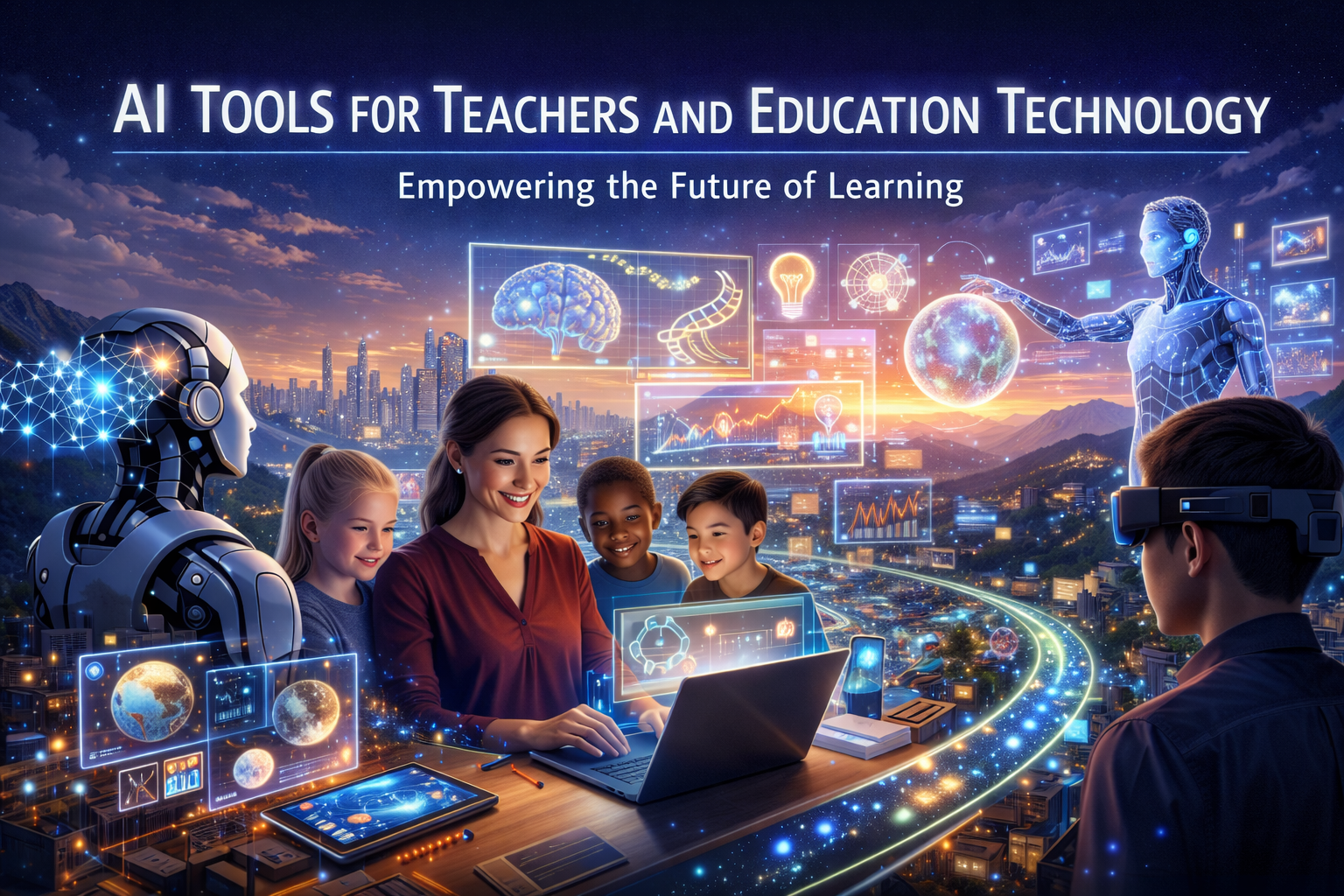
Education has always evolved with technology—from chalkboards to projectors, from computer labs to online classrooms. Today, artificial intelligence (AI) is shaping the next transformation. AI tools are not replacing teachers; they are enhancing their capabilities, reducing administrative burdens, and personalizing learning in ways that were once unimaginable.
In the world of education technology (EdTech), AI is becoming a powerful partner—supporting both educators and students in meaningful ways.
The Growing Role of AI in Education
Teachers wear many hats. They plan lessons, grade assignments, manage classrooms, track student progress, communicate with parents, and offer emotional support. AI tools are emerging to ease this workload and allow teachers to focus on what matters most: teaching and mentoring.
AI in education works in three key areas:
Automation of routine tasks
Personalized learning experiences
Data-driven insights for better decision-making
How AI Tools Support Teachers
- Lesson Planning and Content Creation
AI-powered platforms can generate lesson outlines, quizzes, reading materials, and classroom activities in minutes. Teachers can customize content based on grade level, subject, or learning objectives.
This reduces preparation time and allows educators to dedicate more energy to interactive teaching.
- Automated Grading and Feedback
Grading assignments—especially in large classes—can be time-consuming. AI tools can automatically grade multiple-choice tests, analyze short answers, and even provide writing feedback on grammar and structure.
More importantly, AI can offer instant feedback to students, helping them learn from mistakes faster.
- Personalized Learning Paths
Every student learns differently. AI systems analyze performance data and adapt learning materials accordingly. Struggling students receive additional support, while advanced learners are challenged with more complex tasks.
Personalization increases engagement and improves outcomes.
- Student Performance Analytics
AI dashboards provide teachers with real-time insights into student progress. Instead of manually tracking grades and attendance, educators can identify trends, detect learning gaps, and intervene early.
- Classroom Management Assistance
Some AI tools help monitor engagement in virtual classrooms, track participation, or manage assignments and deadlines efficiently.
Benefits for Students
AI tools don’t just help teachers—they transform the student experience as well.
On-Demand Support
Students can access AI-powered tutoring systems outside classroom hours. These tools answer questions, explain concepts, and provide practice exercises.
Interactive Learning
Gamified AI platforms make learning more engaging. Simulations, adaptive quizzes, and virtual labs enhance understanding.
Language and Accessibility Support
AI translation tools and speech recognition systems assist students who speak different languages or have learning disabilities, making education more inclusive.
AI in Higher Education and Professional Training
Universities and training institutions are also integrating AI into their systems.
Research assistance tools help students analyze academic materials.
Virtual labs and simulations enhance technical training.
Career guidance systems suggest personalized career paths based on strengths and interests.
Academic integrity tools detect plagiarism and promote originality.
AI is expanding learning beyond the classroom into lifelong skill development.
Challenges and Considerations
Despite its potential, AI in education raises important questions.
Data Privacy
Student data must be protected. Schools and institutions need clear policies to ensure secure storage and ethical use of information.
Bias and Fairness
AI systems trained on biased datasets may unintentionally disadvantage certain groups of students. Regular audits and oversight are necessary.
Teacher Training
Introducing AI tools without proper training can create confusion or resistance. Professional development programs are essential.
Over-Reliance on Technology
While AI enhances learning, it cannot replace human connection. Emotional intelligence, mentorship, and classroom relationships remain irreplaceable.
The Future of AI in Education
The future points toward intelligent classrooms—where AI supports real-time translation, immersive simulations, personalized tutoring, and automated administrative systems.
Teachers will increasingly act as facilitators and mentors, guiding students through AI-supported learning journeys. Instead of spending hours on repetitive tasks, educators will focus on creativity, collaboration, and critical thinking development.
Education will become more adaptive, inclusive, and accessible.
Final Thoughts
AI tools in education technology represent a powerful shift—not toward replacing teachers, but toward empowering them.
When used responsibly, AI reduces workload, enhances personalization, and opens new possibilities for student engagement. However, technology must always serve human values. The goal is not automation for its own sake, but better learning outcomes and stronger educational communities.
In the hands of thoughtful educators, AI becomes more than a tool—it becomes a catalyst for the future of learning.